
 JA
 EN
 ZH


 Home
/
News
/
Industry News
/

Differences Between 2-Wire and 3-Wire Dual-Color Temperature LED Strips | A Guide to Selection and Matching for Projects
Two-wire vs three-wire LED strips are easy to confuse—and confusing them is an expensive mistake. In our 21 years manufacturing LED strips at Mingxue Optoelectronics, we’ve seen procurement officers and contractors unpack a shipment only to find their pre-ordered controllers are incompatible with the dual-color-temperature strips they received. The result: project delays, added costs, and sometimes client penalties. The root cause is almost always the same—failing to verify the wire configuration before ordering. This guide explains the difference and how to choose correctly the first time.
1. What is the difference between two-wire and three-wire dual-color-temperature LED strips?
The primary function of a dual-color-temperature LED strip is, of course, “color adjustment,” but the physical methods used to achieve this differ significantly. The number of wires determines the type of controller required; using the wrong configuration means the controller won’t be compatible. Understanding this distinction is the key to making the right choice.
1.1 Three-wire dual-color-temperature LED strips:
Simply put, these are LED strips capable of adjusting between cool and warm color temperatures. However, there is a common pitfall: there are two distinct ways to achieve this adjustment—using either a two-wire or a three-wire system. Each requires a completely different type of controller. If you choose the wrong wire configuration, the controller won’t match. Therefore, the first step in purchasing is to decide: do you need a two-wire or a three-wire strip? This is the fundamental basis for your selection.
1.1.1 The operating principle is straightforward: a dual-color-temperature controller independently adjusts the current intensity for the cool-light and warm-light circuits. Increasing the cool-light component shifts the color temperature toward white, while increasing the warm-light component shifts it toward yellow. This three-wire solution offers smooth color transitions, flicker-free performance, and stable color temperature.
1.1.2 Compatibility: It is compatible with the vast majority of mainstream smart home systems on the market, such as Mi Home (Mijia), Aqara (Lumi), DALI, and DMX512, as well as 0-10V dimming power supplies. Consequently, the three-wire strip is the preferred choice for smart dual-color-temperature lighting setups.
1.1.3 Certifications: Our three-wire, project-grade dual-color-temperature strips hold UL, CE, and SAA certifications and feature a highly robust circuit design. This high-stability LED strip is widely favored for large-scale public infrastructure projects and municipal lighting installations.
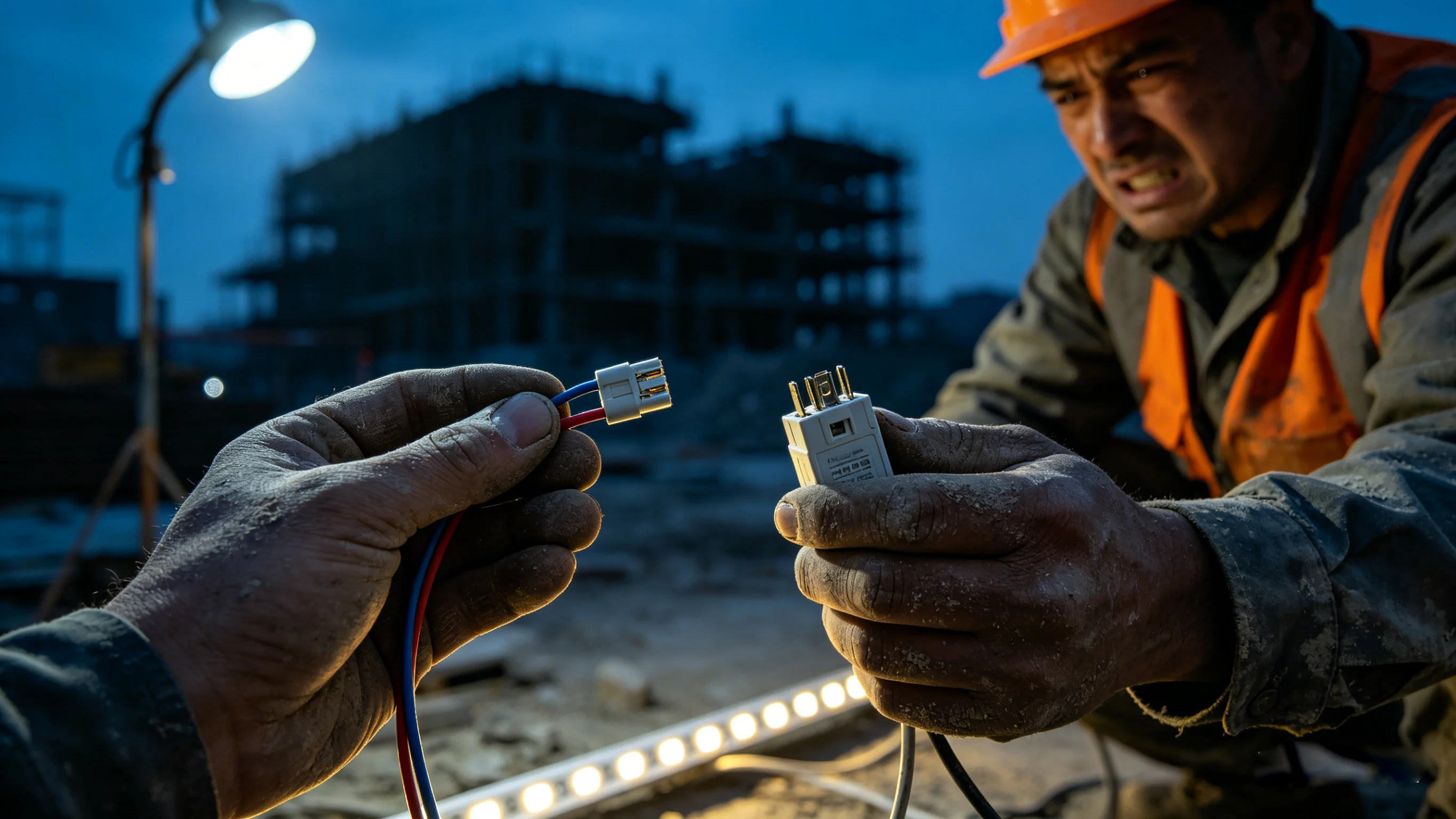
1.2 Two-wire dual-color-temperature LED strips:
This is a “simplified two-in-one” solution often used as a remedial measure for retrofitting existing installations. Inside the strip, cool and warm LED chips are wired into the same circuit, with only two leads (positive and negative) extending from the unit.
1.2.1 Principle: Color adjustment is not achieved by varying the ratio of currents; instead, it relies on “rapid polarity switching” or specific frequency signals from the controller. Consequently, it must be paired with a compatible two-wire dual-color-temperature controller.
1.2.2 Drawbacks: It requires a matching two-wire dual-color-temperature power supply. If connected to a standard three-wire dual-color-temperature controller, the strip may only illuminate in a single color, fail to light up entirely, or even suffer damage to its internal driver chip; poor compatibility is a significant limitation of this type of strip.
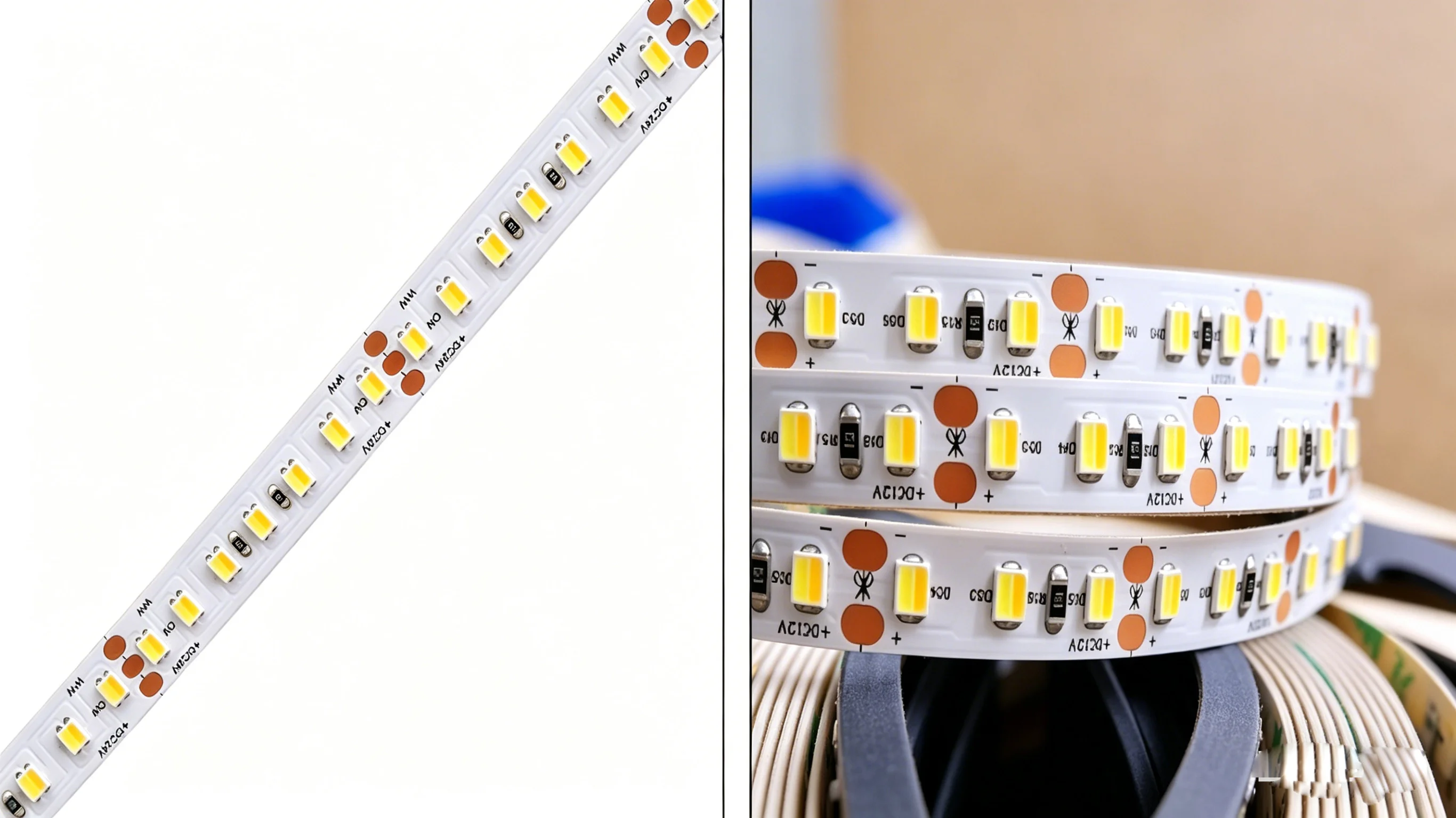
II. Where are dual-color-temperature LED strips typically used?
Thanks to their ability to seamlessly switch between cool and warm light, dual-color-temperature LED strips have become a mainstream choice for smart home interiors, commercial accent lighting, and professional lighting projects. As selection and installation requirements vary significantly depending on the scenario, these factors are key considerations for project procurement specialists and interior designers alike.
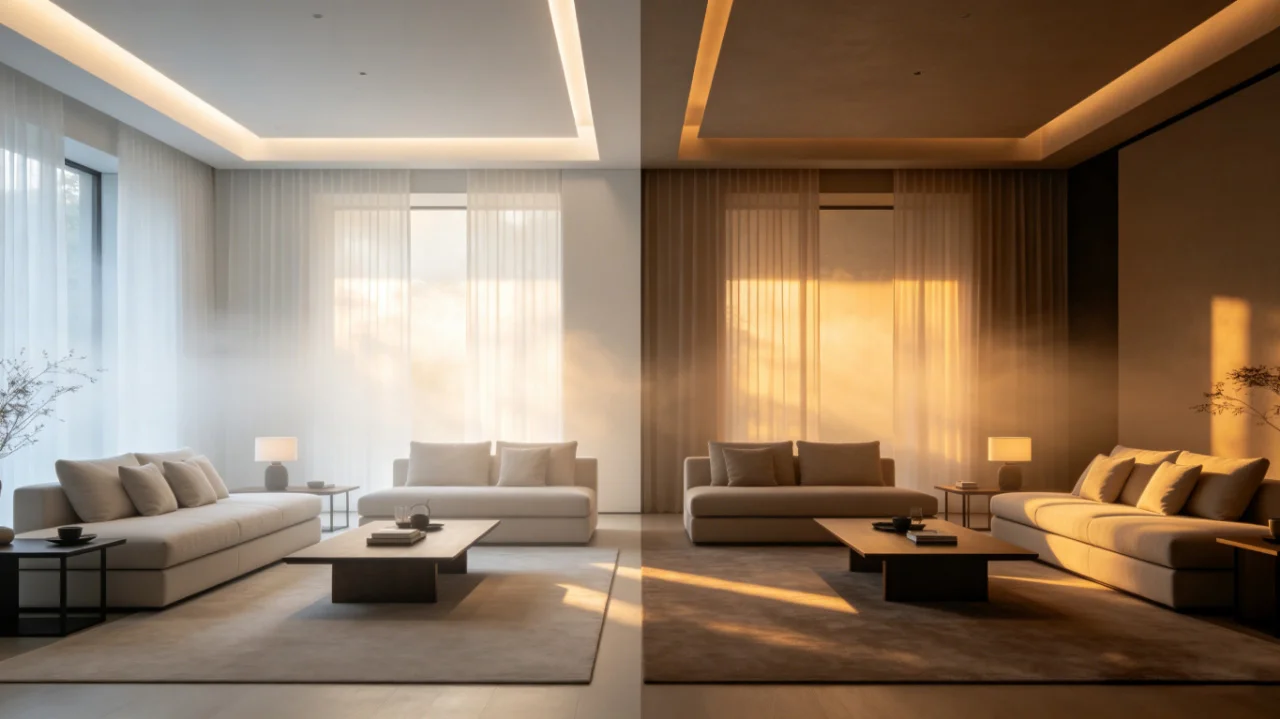
2.1 Whole-home smart lighting: When paired with smart sensors, these strips enable lighting that follows natural circadian rhythms. They automatically adjust to a high color temperature (cool white) in the morning to boost alertness and shift to a low color temperature (warm yellow) late at night to facilitate sleep. Commonly used in home settings—such as recessed ceiling coves, floating ceilings, and “ceiling-light-free” (minimalist) designs—they represent an excellent solution for smart home lighting.
2.2 Commercial retail spaces: Jewelry stores, fashion boutiques, and showrooms often need to adjust lighting tones based on the season or the style of new product collections. The high-CRI (Color Rendering Index), dual-color-temperature LED strips developed by Mingxue Optoelectronics ensure authentic, natural color reproduction across all color temperatures, meeting the rigorous standards for color consistency required in commercial lighting projects.
2.3 Medical and rehabilitation environments: By simulating the natural diurnal cycle of light, these strips help alleviate patient anxiety and shorten recovery times. They are an ideal choice for healthcare and wellness lighting projects, which demand strict performance standards regarding flicker-free operation, low blue light emissions, and stable color temperature.
III. Key Considerations When Purchasing Dual-Color Temperature LED Strips
At our 24,000-square-meter production facility, every batch of dual-color temperature LED strips undergoes rigorous testing. We have prepared this practical checklist specifically for procurement professionals to help you avoid common pitfalls—such as installation rework or controller incompatibility—associated with these products.
3.1 Controller Compatibility: Three-wire and two-wire dual-color temperature LED strips require different controllers; always verify the controller protocol before purchasing. If integrating into a smart home system, the three-wire version is the straightforward choice. Consider the two-wire version only for retrofitting existing properties where only two wires are available in the wall.
3.2 Voltage Drop: A major headache with long-distance installations is color shift and uneven brightness at the far end of the strip. The fundamental solution is simple: choose professional-grade strips featuring 2oz or 3oz thick-copper PCBs. Thicker copper foil minimizes voltage drop, ensuring color consistency from start to finish. This is a crucial technical requirement.
3.3 Certifications: Professionals in the lighting industry know that passing final project inspections is essential. Therefore, prioritize strips with international certifications such as UL, CE, and SAA. At Mingxue Optoelectronics, for instance, we hold all these certifications. These are not merely prerequisites for customs clearance and project acceptance; more importantly, they guarantee that you won’t face issues like significant lumen depreciation, dead LEDs, or color shifting within 3 to 5 years. Peace of mind is paramount.
| Dimension | 3-wire CCT tunable (Common for formal engineering projects) | 2-wire CCT tunable (Simplified version for renovation) |
|---|---|---|
| Circuit Structure | 1 positive pole + 2 negative poles (Cool / Warm) | Only 2 wires: positive and negative |
| Dimming Performance | Stepless smooth transition, precise color temperature | Relatively stiff transition, prone to minor flicker |
| Controller Compatibility | Wide compatibility: works with Mijia, DALI, Zigbee, etc. | Narrow compatibility: must match dedicated 2-wire driver |
| Installation Scenarios | New renovations, high-end projects, smart lighting | Old house renovation, projects without wall breaking & re-wiring |
| Visual Quality | SDCM<3 (Ultra low color tolerance), no green or purple tint | Prone to color shift, average visual quality |
MINGXUE is the brand name of Shenzhen Mingxue Optoelectronics Co., Ltd., and it operates in collaboration with its wholly-owned subsidiary Foshan Mingxue Optoelectronics Co., Ltd. Facing the international market, the company operates under the main brand Mingxue Lighting, and the sub-brand is MXLumen.
Published by Mingxue Lighting | Founded 2005 | Shenzhen R&D Center + Foshan Manufacturing Base | 24,000 sqm | ISO 9001 Certified


