
 JA
 EN
 ZH


Underwater LED Strips: IP68 Guide for Pools & Aquariums
Underwater LED strips are no ordinary lighting product—they face a triple threat that land-based strips never encounter: water pressure, chemical corrosion, and strict electrical safety. From swimming pool ripples to aquarium ecosystems, these installations must survive long-term submersion without leaking, yellowing, or shorting out. There is no room for compromise. At Mingxue Optoelectronics, 21 years in LED manufacturing have shown us that underwater lighting is a high-barrier sector where material choice and sealing method decide everything. This guide walks through the selection criteria for underwater and pool LED strips, so your project delivers both stunning visuals and long-term reliability.
At Mingxue Optoelectronics, we have been deeply rooted in the LED lighting industry for 21 years. Operating a 24,000-square-meter production facility, we are recognized as a National High-Tech Enterprise and a “Specialized, Refined, Differential, and Innovative” (SRDI) enterprise. Leveraging this extensive manufacturing expertise, we would like to walk you through the selection criteria for underwater and swimming pool LED strips, helping you successfully execute your outdoor and underwater lighting projects.
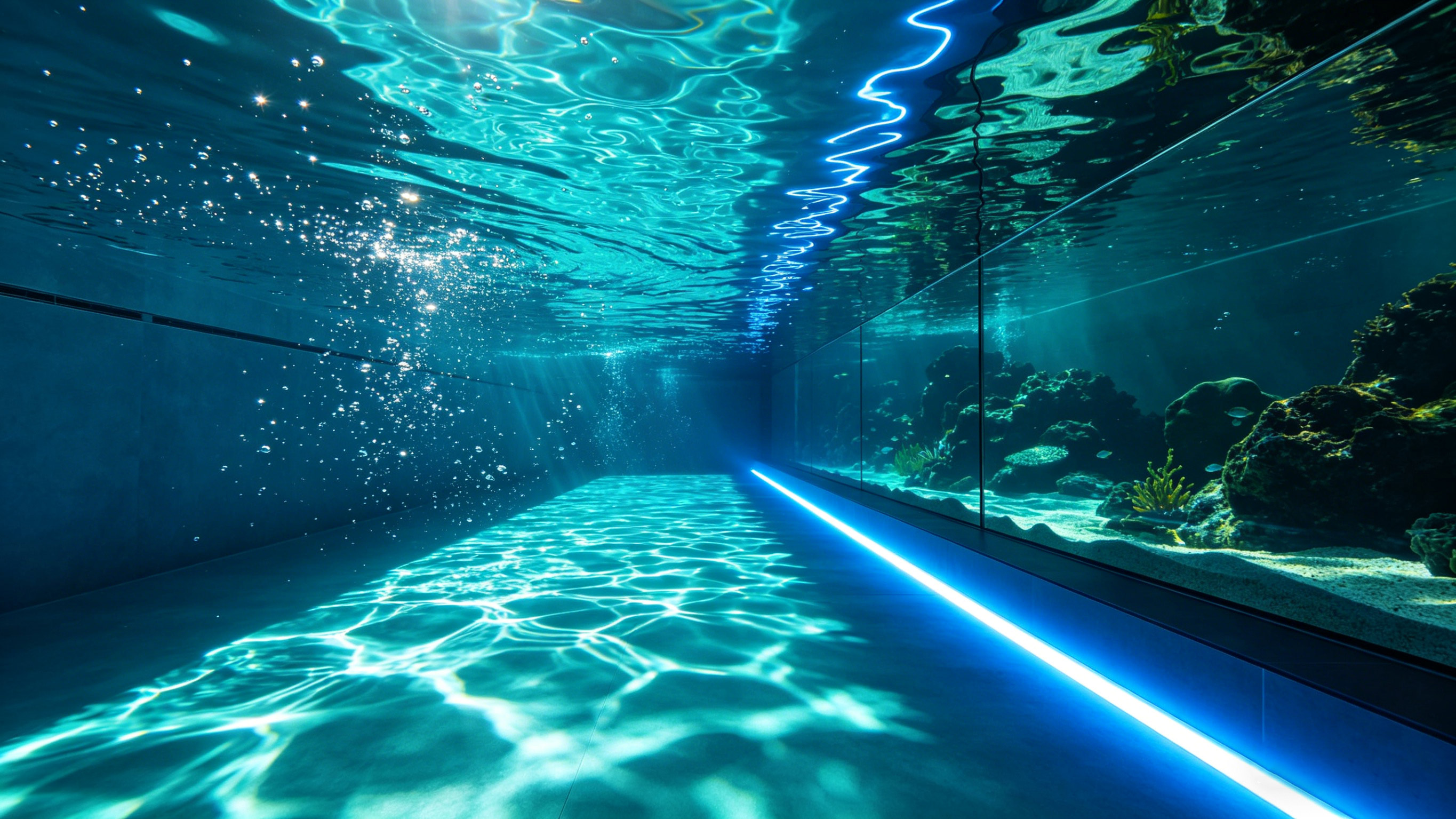
I. The first physical limit any underwater LED strips must clear is water pressure—and it rises fast with depth
1.1 Underwater, pressure increases by one atmosphere for every 10 meters of depth. While standard waterproof LED strips may not leak immediately, prolonged exposure to pressure will eventually force water inside, rendering the strip useless. Although swimming pools and aquariums may not reach depths of 10 meters, they typically involve depths of one to two meters. This depth should not be underestimated; even at just one or two meters, ordinary waterproof strips remain at risk of water ingress—a common source of failure in pool lighting projects.
1.2 New-generation IP68 waterproof LED strips have effectively solved the challenge of deep-water pressure for underwater and pool lighting applications. These industrial-grade underwater strips are engineered—from materials to manufacturing processes—specifically for long-term submersion and resistance to water pressure. They provide stable, continuous illumination at depths of two meters or more. This fundamentally resolves the persistent issue of water seepage and ingress in pool and aquarium lighting strips.
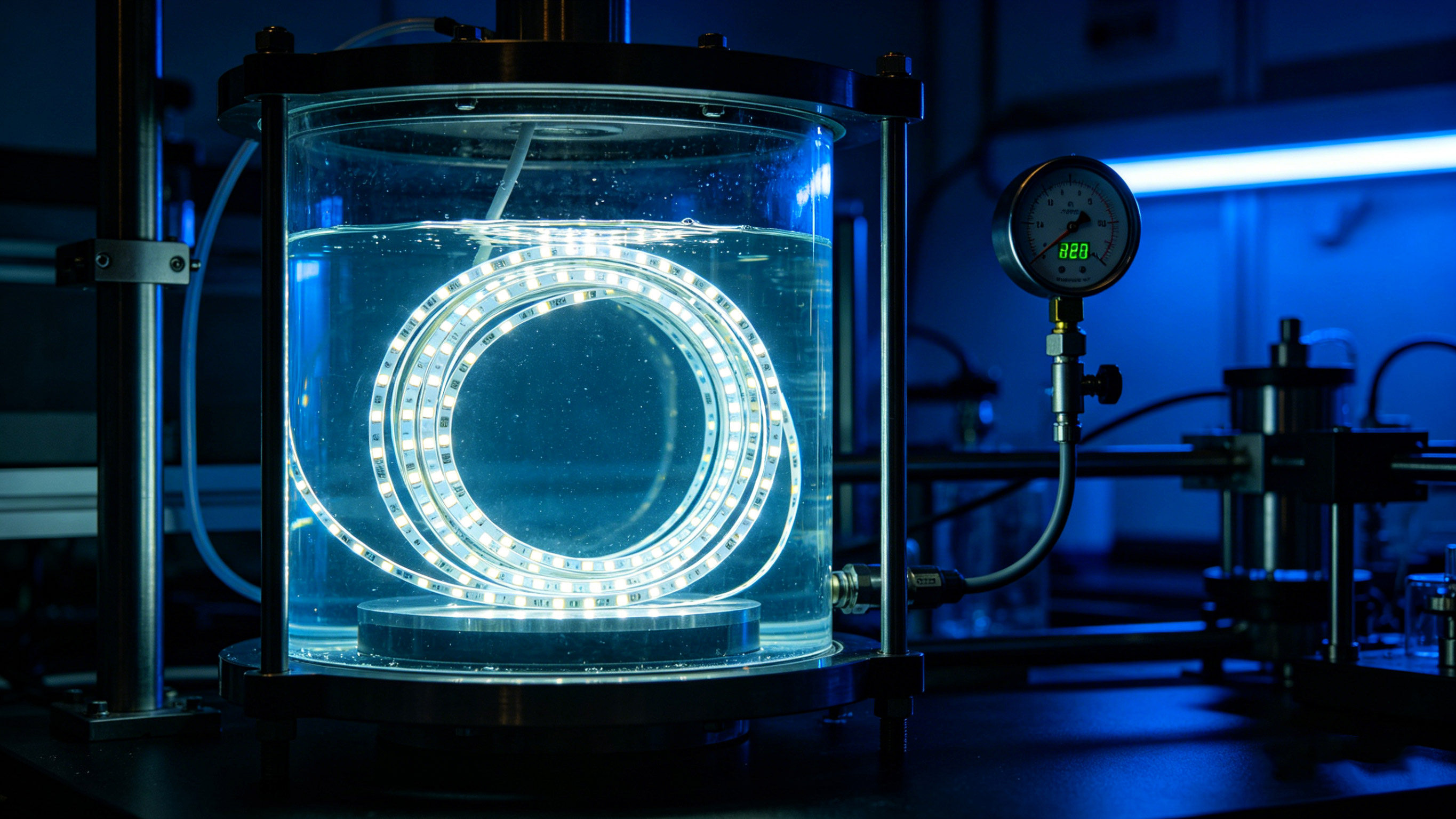
II. Even when an underwater LED strips unit stays dry, the wrong material quietly fails; that’s why standard silicone doesn’t cut it
Many mistakenly believe that any silicone material is suitable for underwater lighting; however, in professional swimming pool and outdoor lighting projects, the material’s molecular structure is the decisive factor for the light strip’s lifespan and reliability.
2.1 Standard silicone poses a hidden risk: prolonged immersion in water causes the material to absorb moisture and swell at the molecular level, compromising its sealing integrity. Over time, water seepage leads to a cascade of issues—circuit oxidation, short circuits, and total light failure. Consequently, light strips designed for long-term underwater use typically avoid standard silicone in favor of materials with superior water and permeation resistance, such as TPU or PVC.
2.2 IP68-rated professional light strips employ materials and manufacturing processes that effectively block all pathways for moisture ingress, offering reliability far superior to traditional neon or standard waterproof light strips. They utilize a multi-layer, integrated extrusion and fusion process to create a dense, impermeable seal that prevents water penetration entirely. As a result, these strips have become the industry standard for swimming pool, aquarium, and water feature lighting projects.
III. Resisting Chemical Corrosion and UV Radiation: Withstanding Bleach, Chlorine, and Sunlight
Pool and coastal outdoor lighting projects operate in highly corrosive environments; combined with UV reflection from the water surface, this accelerates the aging and cracking of standard LED strips.
3.1 Protection Against Pool Chemicals: Pools require regular treatment with high concentrations of chlorine or bromine-based disinfectants to maintain water quality. These chemicals can react with the silicone materials found in standard LED strips, gradually compromising their waterproof integrity. Professional-grade pool lighting strips must offer long-term resistance to chemical erosion to ensure the stability and longevity of the lighting installation.
3.2 UV Resistance and Anti-Yellowing: Outdoor underwater lighting projects are frequently exposed to intense, direct sunlight, which causes standard silicone to yellow, become brittle, and crack. High-quality, engineering-grade underwater LED strips must pass rigorous UV resistance testing to ensure they do not yellow, embrittle, or fade under prolonged sun exposure, thereby preserving the aesthetic appeal of the pool and water feature lighting.
3.3 Resistance to Seawater Corrosion: Salt spray from seawater is highly corrosive to metal, posing a significant challenge for coastal outdoor lighting projects. Our underwater LED strips feature a design with no exposed metal and utilize salt-spray-resistant encapsulation materials. This ensures immunity to corrosion and color shifting in seawater environments, making them suitable for demanding applications such as aquariums and coastal swimming pools.
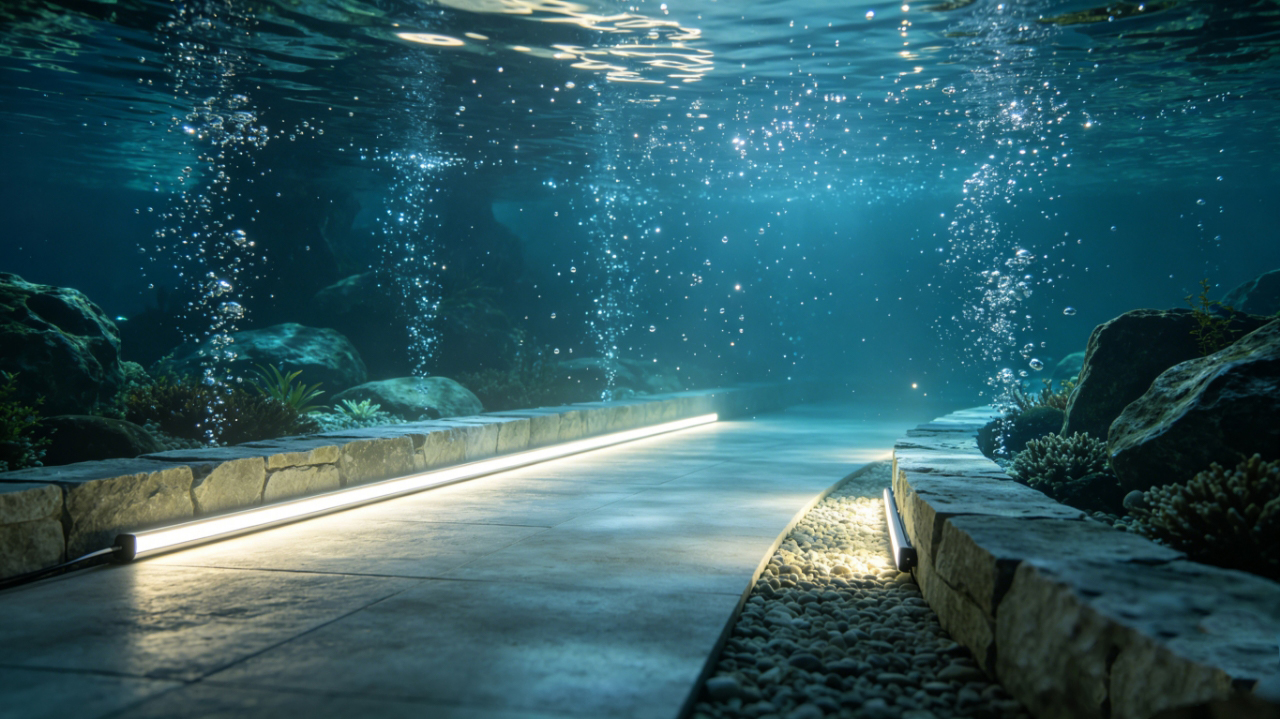
IV. Balancing Safety and Maintenance: The Inevitable Choice of Low-Voltage Underwater LED Strips
Safety is paramount in underwater lighting; the use of high-voltage light strips is strictly prohibited in swimming pools, aquariums, and water feature projects, making a safe, low-voltage power supply the standard for underwater illumination.
4.1 The 12V/24V Low-Voltage Safety Standard: To ensure safety in areas where people come into contact with the water—such as swimming pools and water features—underwater LED strips must operate on a 12V or 24V low-voltage DC power supply. Even in the event of severe damage, the low-voltage current poses no risk of harm to the human body, fully complying with safety regulations for pool and water feature lighting projects.
4.2 Advantages of Easy Installation and Maintenance: Mingxue Optoelectronics provides customized underwater lighting solutions for outdoor and pool projects, featuring waterproof connectors and a modular design. This setup allows for rapid installation, removal, and troubleshooting without requiring extensive dismantling of the structural installation, thereby significantly reducing long-term operating costs for pool and water feature lighting projects.
| Pain Points | Common Industry Issues & Hidden Risks | Professional Solutions | Technical Details & Supporting Evidence |
|---|---|---|---|
| Deep Water Pressure Challenge | Every 10 meters of water depth adds 1 atmosphere of pressure. Ordinary LED strips are prone to water seepage, water ingress and failure due to pressure. | Industrial-grade IP68 Waterproof Technology | Designed for long-term submersion; capable of stable continuous lighting underwater at depths of 2 meters or deeper. |
| Material Penetration Risk | Ordinary silicone absorbs water and swells after long-term submersion, widening the gaps between particles and triggering circuit oxidation and short circuits. | Multi-material Co-extrusion | Replace ordinary silicone with highly impermeable TPU or PVC materials. Multi-layer integrated co-extrusion blocks moisture penetration paths. |
| UV & Aging | Strong UV reflection on the water surface easily causes the strip to yellow, become brittle and crack, damaging appearance and service life. | UV-resistant Enhanced Test & Certification | Passed professional UV resistance testing to ensure no yellowing, brittling or fading under long-term sun exposure. |
| Salt Corrosive Environment | Seawater salt mist causes severe metal corrosion, which may lead to color shift or damage of LED strips. | Non-exposed Metal Design | Adopt salt-spray resistant encapsulation materials together with non-exposed metal design, suitable for complex scenarios such as aquariums and coastal swimming pools. |
| Electrical Safety in Wet Environments | Seawater salt mist causes severe metal corrosion, which may lead to color shift or damage of LED strips. | Non-exposed Metal Design | Adopt salt-spray resistant encapsulation materials together with non-exposed metal design, suitable for complex scenarios such as aquariums and coastal swimming pools. |
Whether for private pool lighting, commercial water feature projects, large-scale aquarium lighting, or underwater and outdoor installations demanding high safety, longevity, and stability, IP68 waterproof LED strips offer the ideal solution for overcoming harsh underwater environments. Backed by 21 years of expertise in LED manufacturing and an automotive-grade quality control system, Mingxue Optoelectronics holds a full suite of international certifications—including UL, CE, and SAA—allowing cross-border sellers to use certified documentation to rapidly clear e-commerce platform audits and project inspections. Leveraging a 24,000-square-meter production facility and over two decades of manufacturing experience, we provide not only highly reliable LED strips but also comprehensive technical support—ranging from voltage drop simulation and solution design to installation guidance. We deliver dependable, long-lasting, and truly waterproof IP68 LED solutions for global pool, underwater, and water feature projects, ensuring safety, stability, and stunning visual effects through every stage, from material selection and production to after-sales service.
For pools, aquariums, and water features, choosing the right underwater LED strips—IP68 sealed, low-voltage, UV- and salt-resistant—turns a high-risk install into a lasting centerpiece.
Published by Mingxue Lighting | Founded 2005 | Shenzhen R&D Center + Foshan Manufacturing Base | 24,000 sqm | ISO 9001 Certified


