
 JA
 EN
 ZH


12V vs 24V LED Strip Selection: Which One for Your Project?
Choosing between 12V and 24V LED strips is one of the first calls in any low-voltage project—and the wrong pick shows up later as dimming ends, cluttered wiring, or flicker. The two aren’t just different voltages; they diverge in current, voltage drop, cutting length, and total wiring cost. This guide to 12V vs 24V LED strip selection walks through where each voltage wins, the pitfalls to avoid, and how to match the strip to your run length and environment.
1. What are the differences between 12V and 24V LED strips?
The differences between 12V and 24V LED strips primarily lie in four areas: current, voltage drop, cutting length, and wiring costs.
At the same power output, the current in a 12V strip is roughly double that of a 24V strip. Higher current leads to greater power loss on the PCB and makes voltage drop issues more pronounced.
However, 12V strips have their own advantages—the cutting increment is typically around 2.5 cm, offering much greater flexibility than the standard 5–10 cm intervals found on 24V strips.
Regarding heat dissipation, the higher current causes 12V strips to run hotter, leading to faster light output degradation over long runs; conversely, 24V strips operate with lower current and generate less heat, resulting in a longer overall lifespan. Therefore, the choice depends on whether you prioritize cutting flexibility or long-distance stability and longevity.
2. Why are 24V LED strips generally recommended over 12V strips for long-distance lighting installations?
Long-distance outdoor lighting projects inevitably face the issue of voltage drop—where the strip is bright at the beginning but dims towards the end.
① With 24V systems, the operating current is halved, significantly reducing power loss caused by the internal resistance of the circuit board. Provided the wattage is appropriate, a single strip can extend to about 10 meters without noticeable color variation, eliminating the need for intermediate power injection; in contrast, 12V strips often dim at the far end when exceeding 5 meters, requiring multiple power connection points and resulting in cluttered wiring.
② Lower current results in less heat generation, ensuring greater durability during prolonged, continuous operation. This makes them ideal for long-run applications such as commercial lighting, architectural outline lighting, and whole-house “no-main-light” designs.
③ They require fewer wiring materials and do not necessitate thick-gauge cables, thereby reducing both labor and material costs and offering superior overall cost-effectiveness for large-scale lighting projects.
3. Where are 12V LED strips particularly useful?
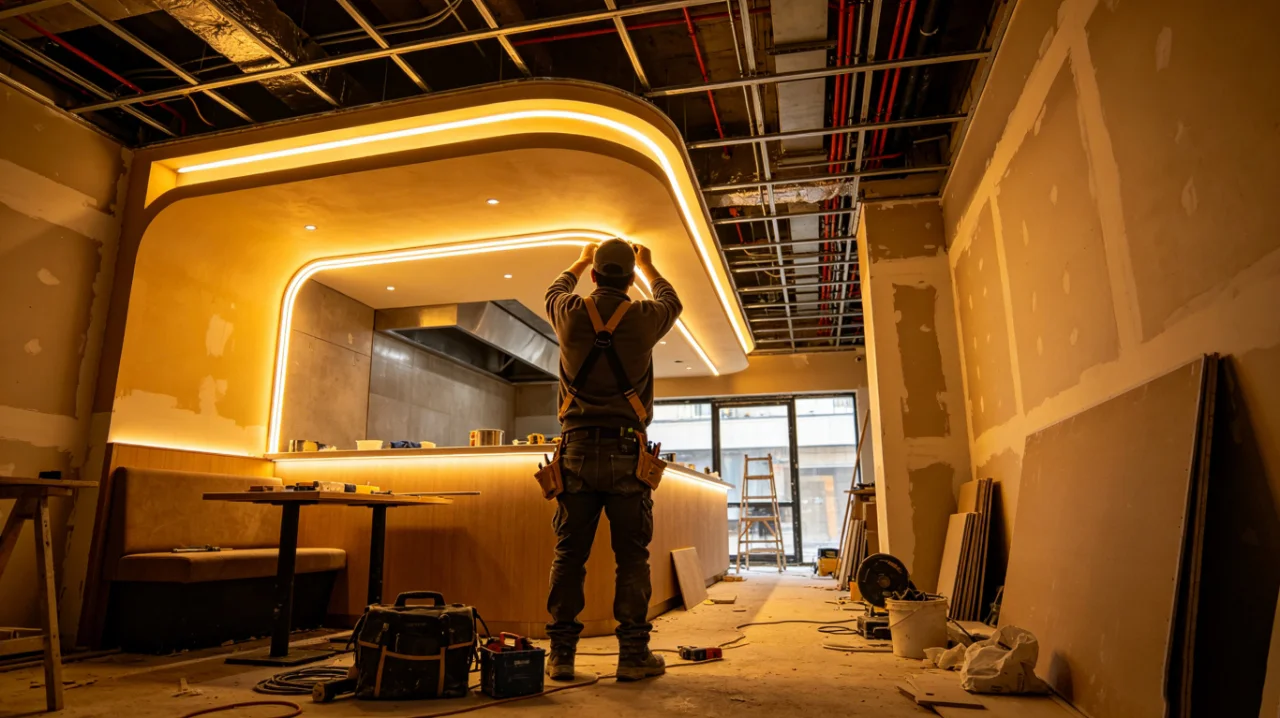
① Precision cutting: They can be cut at intervals of 25mm (or even smaller), allowing for a precise fit in tight or irregularly shaped spaces—such as cabinet and bathroom lighting, automotive interior ambient lighting, and small display cases—while minimizing material waste and simplifying installation.
② Ideal for small-scale, short-run applications: They offer stable performance for short strip lengths (under 5 meters) and require only a compact power supply, making installation easy and accessible.
③ Wide range of applications: They are versatile enough for everything from automotive accent lighting and desktop ambient lighting to small-scale DIY projects and localized counter lighting, with a wide variety of accessories readily available.
4. Common issues encountered when purchasing low-voltage LED strips
① Overlooking voltage drop: Blindly choosing 12V for long-run projects leads to uneven brightness between the start and end of the strip after installation, resulting in high rework costs.
② Selecting power supplies without a safety margin: Operating a power supply at full load often causes flickering and accelerated light decay; it is recommended to reserve a 20% power margin.
③ Skimping on PCB copper thickness: Thin copper substrates have poor conductivity, exacerbating voltage drop; for long-run projects, prioritize strips using 2oz rolled copper.
④ Ignoring waterproof ratings: Using non-waterproof (bare) strips in outdoor or humid areas leads to water ingress and premature failure.
⑤ Lack of compliant certifications: For export or municipal projects, failing to source fully certified products (such as those from Mingxue Optoelectronics, which hold comprehensive certifications like UL and CE) can lead to obstacles during project acceptance or customs clearance.
5. Common Use Cases for Low-Voltage LED Strips
Applications for 24V LED Strips
Whole-house “no-main-light” designs, architectural outline lighting, courtyard illumination, long linear lighting in showrooms, large commercial storefronts, landscape projects, and other installations requiring lengths exceeding 5 meters.
Applications for 12V LED Strips
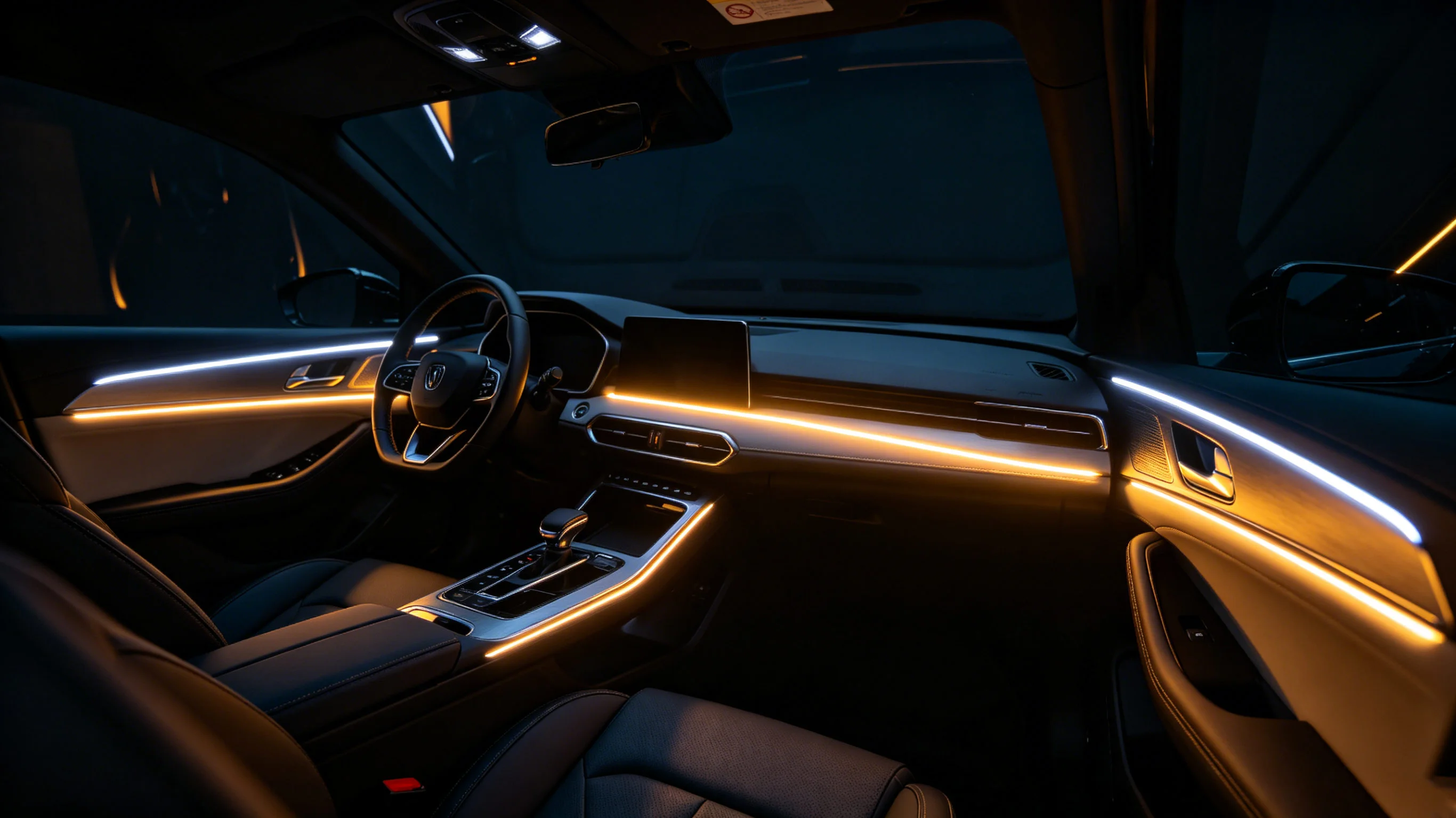
Automotive interior modifications, under-cabinet lighting, short strips for display cases, DIY desktop ambient lighting, and short-range indoor accent lighting.
| Pitfall Category | Core Risk Points | Project Implementation Solutions |
|---|---|---|
| Voltage Drop Planning | Blindly selecting 12V for long-distance projects, resulting in uneven brightness from start to finish after installation and high rework costs | Directly choose 24V LED strips for projects over 5 meters, paired with 2oz thick copper PCB substrate |
| Power Supply Configuration | Fully loaded power supply, prone to flicker, lumen depreciation and power burnout | Reserve ≥20% power margin for power supplies; select power supply at 1.2 times the total power of LED strips |
| Product Quality Control | Cutting corners on PCB copper thickness, poor conductivity exacerbates voltage drop; Incompatible IP rating for application scenarios | Prioritize 2oz rolled copper LED strips for long-run projects; select IP67/IP68 waterproof models for outdoor / humid areas |
| Compliance & Acceptance | No international certifications such as UL/CE/SAA, blocking customs clearance and acceptance for foreign trade and municipal projects | Prioritize engineering LED strips from original manufacturers with full-process quality control and complete international certifications |
| Installation & Construction | Improper cutting and wiring causing dead pixels, short circuits and color temperature deviation | Cut at marked cutting units on strips; implement waterproof insulation for wiring; use strips from the same batch and unified wiring |
6. Recommendations for Selecting LED Strips from Mingxue Lighting
For installations under 5 meters that require intricate shaping, choose 12V LED strips; for longer indoor or outdoor lighting projects exceeding 5 meters, opt for 24V strips. Ensure the use of LED strips with 2oz copper PCBs, provide sufficient power supply headroom, and select IP67/IP68-rated waterproof versions for outdoor applications to prevent future malfunctions. With 21 years of expertise in the LED strip industry, Mingxue Optoelectronics operates a 24,000-square-meter production facility, manufacturing a comprehensive range of 12V and 24V professional-grade LED strips. The company offers customization options—including dual-color temperature, RGB, and silicone-encapsulated waterproof designs—and its entire product line holds international certifications such as UL, CE, and SAA. Mingxue provides one-stop services, including voltage-drop simulation and project design, catering to residential lighting, commercial lighting, landscape design, and export procurement. As a direct manufacturer, the company effectively addresses common project challenges such as voltage drop, light degradation, and non-compliance with inspection standards.
In summary:
For short-distance lighting or applications requiring precise cutting, choose 12V LED strips.
For long-distance lighting or large-scale professional projects, choose 24V LED strips.
Defining the specific installation environment and power supply distance for your project is far more important than simply comparing technical specifications or price.
Published by Mingxue Lighting | Founded 2005 | Shenzhen R&D Center + Foshan Manufacturing Base | 24,000 sqm | ISO 9001 Certified


