
 ZH
 EN
 JA


 Home
/
News
/
Industry News
/

COB vs. SMD LED Strips: A Buying Guide Based on Brightness and Uniformity
COB vs SMD LED strips are the two most frequently compared LED strip types, and the choice comes down to brightness, light uniformity, budget, and where you’ll install them. COB (Chip On Board) packs multiple chips into a seamless surface for dot-free light, while SMD (Surface Mount Device) mounts individual chips on a PCB—a mature, cost-effective, and versatile option. This guide breaks down both technologies across the metrics that matter and helps you pick the right one for your project.
I. Fundamentals: Understanding COB vs. SMD LED Strip Lights
1.1 COB LED Strip Lights: High-Density Integration for “Seamless Illumination”
COB (Chip On Board) technology involves mounting multiple LED chips directly onto a substrate to create a continuous, unbroken light-emitting surface. Its defining feature is the minimal spacing between chips—virtually imperceptible to the naked eye—which fundamentally eliminates the “dotted” or “pixelated” look common in traditional strip lights. Our COB strips utilize high-quality integrated chips and high-transmittance silicone encapsulation; they deliver seamless light output and excellent heat dissipation, effectively minimizing light decay and extending lifespan. They can also be cut to any length, making them ideal for installations involving complex shapes or contours.
1.2 SMD LED Strip Lights: The Mature, “Universal” Mainstream Choice
SMD (Surface Mount Device) technology involves mounting individual LED chips onto a PCB (Printed Circuit Board); common specifications include SMD2835, SMD5050, and SMD3528. As a mainstream market category, SMD strip lights feature mature technology and diverse specifications, allowing for flexible adaptation to various brightness and voltage requirements. Our SMD strips utilize high-CRI (Color Rendering Index) chips (Ra ≥ 90) for superior color accuracy. They offer customizable voltage (12V/24V) and waterproof ratings (IP44–IP67), making them suitable for a wide range of applications—from residential and commercial settings to large-scale engineering projects—while offering outstanding cost-effectiveness.
II. Comparison of Key Dimensions: Focusing on Brightness and Uniformity to Clarify Differences
2.1 Key Dimension 1: Brightness Performance—Distinct Advantages, Matching Specific Needs
The primary factors influencing brightness are LED chip power and luminous density; each type is suited to different brightness application scenarios:
●- SMD LED Strips: Offer a wide range of individual chip power options (0.2W–1W), allowing brightness output to be adjusted by varying the number of chips. Standard models provide 80–300 lm/m, while high-power SMD5050 models can exceed 500 lm/m. They are ideal for scenarios requiring specific, high brightness levels, such as outdoor architectural lighting or commercial window displays.
●- COB LED Strips: Feature high-density chip integration, resulting in higher luminous efficiency per unit length. At the same power level, they are 15%–20% brighter than standard SMD strips and produce softer, glare-free light. With a brightness range of 120–400 lm/m, they are well-suited for applications prioritizing both high brightness and visual comfort, such as showrooms and living room feature walls.
2.2 Key Dimension 2: Luminous Uniformity—COB Wins on Seamlessness; SMD Requires Spacing Control
Luminous uniformity represents a visible difference between the two and is a primary factor for many users when making a selection:
●- COB LED Strips: Feature a continuous, unbroken light-emitting surface free from “dotting” or “shadow bands.” Even when viewed from close range (within 30 cm), they deliver a uniform, planar light effect. They are an excellent choice for applications requiring seamless lighting, such as recessed ceiling coves or curved decorative elements where the light source needs to be concealed to create ambiance.
●- SMD LED Strips: Because the LED chips are distributed individually with specific gaps between them, uniformity is significantly influenced by the spacing. If the spacing is too wide (>10mm), distinct light spots will appear at close range; a model with narrow spacing (3-5mm) is required to ensure good uniformity. These are better suited for long-range illumination (>1m) or applications where uniformity is not critical, such as under-cabinet lighting or balcony lighting.
2.3 Supplementary Comparison: Cost, Installation, and Lifespan
★COB LED Strips: Feature complex packaging technology and higher costs (20–30% higher than SMD for the same power output); can be cut to any length to fit complex shapes; require a dedicated constant-current driver and a moderate level of technical expertise for installation; offer uniform heat dissipation and slow light decay; typical lifespan of 6–10 years, with a 5-year warranty for professional-grade products; highly customizable (brightness and color temperature can be adjusted on demand), making them ideal for personalized applications.
★SMD LED Strips: Utilize mature technology with controllable costs and high cost-performance ratios, making them the mainstream choice for most consumers; can be cut at designated intervals; compatible with various driver types (constant current or constant voltage); easy for beginners to handle with low installation complexity; standard models last 3–5 years, while high-quality versions (such as our products) can last 5–8 years, with warranties ranging from 2 to 3 years; feature standardized specifications and ample stock availability, allowing for quick fulfillment of standard requirements.
III. Scenario-Based Selection Guide: Which Type Should You Choose for Your Project?
3.1 Residential Settings: Prioritizing Lighting Comfort While Balancing Cost
3.1.1 Scenarios Favoring COB LED Strips
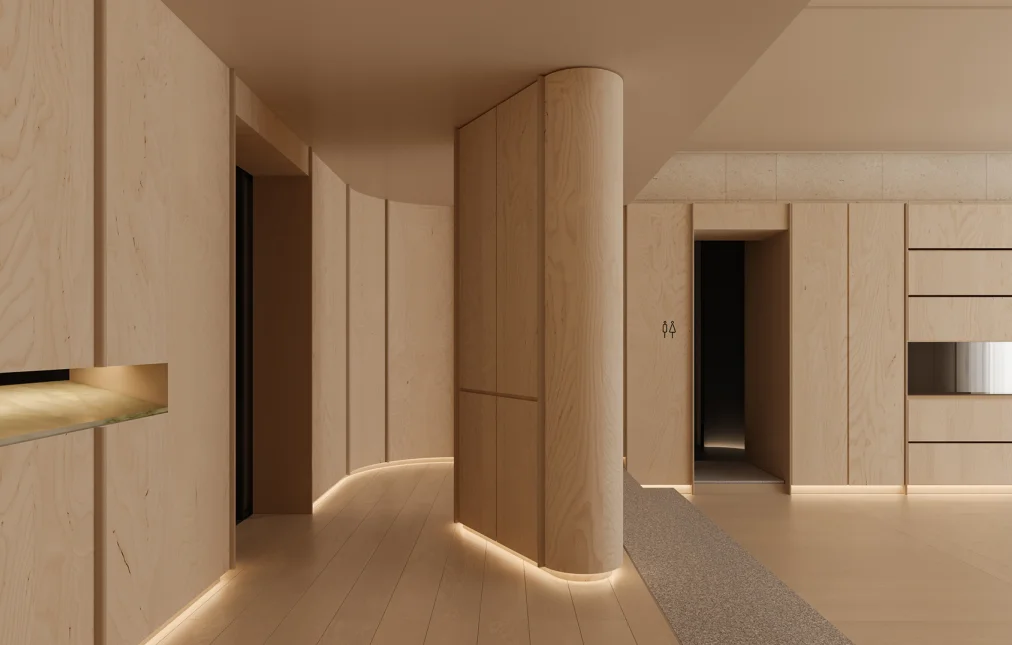
●- Living room feature walls / recessed ceiling coves: Requires soft, seamless ambient lighting; the uniform light output of COB creates a “floating light” effect, adding a premium feel to the space.
●- Bedroom bedside lighting: Requires soft, glare-free light to avoid eye strain; the surface-light characteristics of COB are better suited for this purpose.
●- Curved or irregularly shaped decorative elements (e.g., circular ceilings, stair handrails): COB strips can be bent and cut freely without visible breaks, ensuring continuous light output.
3.1.2 Scenarios Favoring SMD LED Strips
●- Under-cabinet / drawer lighting: High uniformity is not critical; SMD offers excellent cost-effectiveness, and waterproof versions (IP65) can withstand humid kitchen environments.
●- Balcony / entryway lighting: Standard brightness levels suffice; SMD strips are readily available in stock and easy to install, making them ideal for DIY projects.
●- Whole-house general lighting with a limited budget: When covering large areas, the cost advantage of SMD is significant, helping to keep the overall renovation budget under control.
3.2 Commercial/Engineering Scenarios: Balancing Performance and Efficiency to Match Project Scale
3.2.1 Scenarios Favoring COB LED Strips
●- Luxury/High-end Product Showrooms: Require high brightness and uniform lighting to faithfully render product colors and enhance the brand’s premium feel;
●- Commercial Shop Windows/Feature Walls: Aim for a distinctive atmosphere; COB’s seamless lighting effect highlights exhibits and captures customer attention;
●- Building Facade Lighting/Curved Architectural Outlines: Require continuous, unbroken light lines; COB adapts well to complex architectural shapes.
3.2.2 Scenarios Favoring SMD LED Strips
●- Public Areas in Large Malls/Supermarkets: Involve large-scale installation with moderate uniformity requirements; SMD offers low costs and high production capacity, ensuring reliable delivery schedules;
●- Park Walkways/Outdoor Signage: Standard brightness suffices; SMD offers a wide range of waterproof ratings (IP65–IP67) to withstand harsh outdoor environments;
●- Temporary Exhibitions/Event Setups: Require rapid implementation; SMD is easy to install and readily available in stock, helping to reduce project preparation costs.
IV. Purchasing Tips & Brand Assurance: Choosing the Right Product and Provider
4.1 Three Key Tips to Avoid Purchasing Pitfalls
●- Pitfall 1: Focusing solely on brightness while ignoring color rendering. High-quality LED strips should meet an RA ≥ 90 to prevent color distortion (especially in commercial settings).
●- Pitfall 2: Overlooking driver compatibility. COB strips require dedicated constant-current drivers, while SMD strips need drivers matched to their voltage to prevent burnout.
●- Pitfall 3: Blindly chasing low prices. Inferior strips often suffer from rapid light decay, poor heat dissipation, and safety hazards; prioritize branded products with certified test reports.
4.2 Our Brand Assurance: Purchase with Confidence
As a professional manufacturer specializing in LED strips, we utilize high-quality chips and advanced packaging processes for both our COB and SMD series. We offer customization options (brightness, color temperature, length, and waterproof rating) alongside comprehensive pre-sales consultation and post-sales warranty services:
●- Pre-sales: Free application-specific lighting solutions and product selection assistance to minimize purchasing risks.
●- During-sales: Sample testing support and production progress tracking for bulk orders to ensure timely delivery.
●- Post-sales: 24-hour response and resolution for any quality-related issues.
In short, the core logic for selection is as follows: Choose COB if you prioritize seamless, uniform lighting effects and high visual comfort and have a sufficient budget; choose SMD if you prioritize cost-effectiveness and versatility, or require rapid installation over large areas. Regardless of the choice, the decision should be based on a comprehensive assessment of your specific brightness requirements, installation environment, and budget.
MINGXUE is the brand name of Shenzhen Mingxue Optoelectronics Co., Ltd., and it operates in collaboration with its wholly-owned subsidiary Foshan Mingxue Optoelectronics Co., Ltd. Facing the international market, the company operates under the main brand Mingxue Lighting, and the sub-brand is MXLumen.
Published by Mingxue Lighting | Founded 2005 | Shenzhen R&D Center + Foshan Manufacturing Base | 24,000 sqm | ISO 9001 Certified


